Inside the Meraki Espresso Machine: Grinder, Dual Boilers, and Built-In Scales Explained
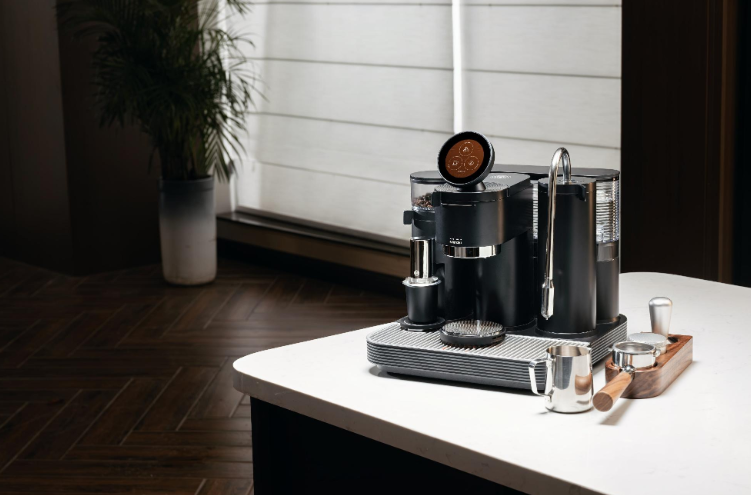
Open up any serious home espresso setup and you will find the same three questions waiting for you. How fine should the coffee be ground? How hot, and how stable, should the water be? And how much coffee are you actually using? Get those three answers right, and most of your shots will taste good. Get one wrong, and even excellent beans can taste sour, bitter, or thin. That is why an integrated machine is worth understanding from the inside out: its grinder, boilers, and scales are not separate gadgets that happen to share a box. They are parts of one system, and each one solves a problem that home baristas run into every day.
The Grinder: Where Good Espresso Really Starts
Ask experienced baristas what matters most, and many will say the grinder before the machine. That sounds surprising until you think about what grinding does. Espresso forces hot water through a tightly packed bed of coffee in under thirty seconds. If the particles are uneven, water finds the easiest path, over-extracting some grounds and under-extracting others. The result is a cup that tastes both bitter and sour at once, which is exactly the muddled flavour that puts people off home espresso.
A built-in grinder removes one of the biggest sources of that inconsistency: the gap between grinding and brewing. Ground coffee loses aroma quickly, so grinding fresh for each shot matters. It also matters that the grind setting matches the brewing settings. When the grinder and brewer are designed together, a small adjustment to grind size produces a predictable change in the shot, rather than a guessing game. You still learn by tasting, but you learn faster because the variables are not fighting each other.
Dual Boilers: Why Two Boilers Beat One
Brewing and Steaming at the Same Time
A single-boiler machine has to do two jobs at different temperatures. Espresso brews at around 93 degrees, while milk steaming needs much hotter, drier steam. A single boiler must heat up, cool down, or wait between those jobs, which means you either brew first and steam later, or you compromise on one of them. For a single morning coffee, that delay is bearable. For two cappuccinos before work, it becomes a bottleneck.
Dual boilers solve this by giving each job its own boiler. One holds brewing water at a stable temperature, while the other produces steam on demand. You can pull a shot and steam milk at the same time, which is not just faster. It also means your milk is ready while the espresso is still fresh, so the drink comes together properly instead of in stages.
Built-In Scales: Small Detail, Big Difference
Scales are the least glamorous part of an espresso setup, and they are also the part most beginners skip. Yet dose and yield are the two numbers that let you repeat a good shot. If you use 18 grams of coffee one day and 20 grams the next, without realising it, you will chase your tail adjusting grind size for a problem that was really about dose. Built-in scales remove that guesswork by weighing as you go, so the dose is the same every time unless you deliberately change it.
They also help with ratio, which is simply the relationship between coffee in and espresso out. A common starting point is roughly one part coffee to two parts espresso by weight, and from there you adjust to taste. Without scales, that ratio is a guess based on volume, which changes with crema and cup shape. With scales, it becomes a number you can record, repeat, and refine. Over time, that habit builds a much better palate, because you know what changed when a shot tastes different.
How the Parts Work Together
The real advantage of integration is not any single component. It is how the components share information. The grinder knows the dose the scales measured. The boilers hold temperature while the shot extracts. The software can tie those pieces together, suggesting adjustments or keeping profiles consistent from one day to the next.
That is where Meraki app and firmware comes into the picture. Software does not replace taste, and it should not pretend to. What it can do is keep track of settings, guide you through changes, and make the machine easier to live with over time. If a firmware update improves temperature control or adds a useful feature, your machine gets better without you buying new hardware. For a long-term purchase, that kind of ongoing support matters as much as the launch specifications.
What to Look For When You Compare Machines
If you are shopping for an integrated machine, do not get distracted by looks alone. Ask how many grind steps the grinder offers, and whether adjustments feel precise. Ask whether the brew boiler holds temperature during back-to-back shots. Ask whether the scales are accurate enough to trust, and whether the machine is easy to clean. Those questions matter more than a long list of preset drinks you may never use.
Also consider the long term: a machine that is easy to maintain will still produce great coffee in three years, while a fiddly one may gather dust.
For many home baristas, the appeal of this particular integrated design is exactly that combination: a capable grinder, stable dual boilers, and scales that keep everything honest. You can explore the full specifications and design thinking behind the meraki espresso machine to see how those parts are meant to work together. The headline features matter, but the daily experience matters more. It is the machine you reach for every morning, after all, and it should make that morning easier, not more complicated.
See also: Executive Chauffeur Services: Redefining Business Travel in Eastleigh
A Simpler Way to Think About It
If you remember only three things, remember these. The grinder controls extraction, so it deserves your attention. Dual boilers control temperature and timing, so they deserve theirs. Scales control repeatability, so they deserve a place in the process even if they seem boring. When all three work together, home espresso stops feeling like a lottery. It starts feeling like a craft you can actually improve at, one cup at a time. That is the real promise of an integrated machine, and it is a promise worth testing with your own beans, your own milk, and your own mornings.