Before Design Freeze: Why Medical PCB Manufacturing Decisions Need to Start Early
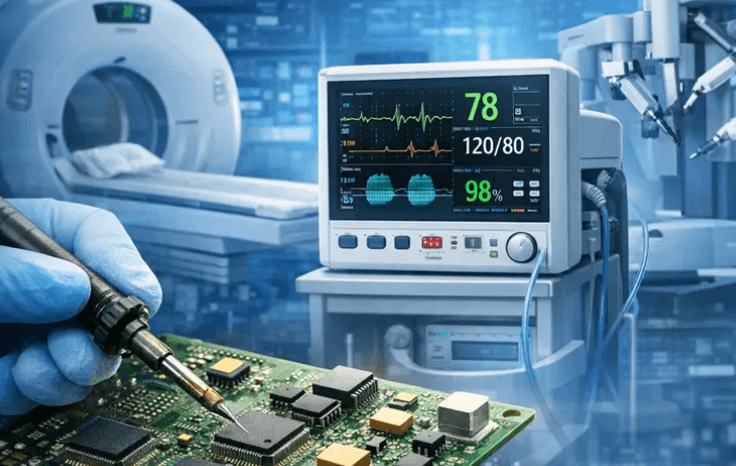
In medical electronics development, design freeze can feel like the point where engineering ends and manufacturing begins. In practice, waiting until then to discuss production can create unnecessary problems. Decisions involving PCB fabrication and assembly should be considered while the hardware is still being refined, especially for projects that require specialized medical PCB assembly. Early manufacturing input can uncover issues that are much easier to correct before drawings, BOMs, and test requirements are finalized.
A Finished Schematic Is Not a Finished Manufacturing Plan
A circuit can perform exactly as intended while still being difficult to manufacture efficiently.
Before design freeze, teams should review practical details such as component spacing, package selection, PCB stack-up, assembly clearances, connector orientation, and test access.
Small adjustments at this stage may prevent much larger changes after prototypes have already been built.
Component Choices Can Create Long-Term Problems
Medical devices may remain in production much longer than many consumer products. This makes component selection particularly important.
A technically suitable component may still create problems if it has:
- Unstable availability
- A long procurement lead time
- Limited alternatives
- Special storage or handling requirements
Reviewing these risks before the BOM is locked gives engineering teams more flexibility to select sustainable alternatives.
Testing Requirements Can Influence the PCB Design
Testing is often treated as something to plan after the board has been designed. For medical electronics, that can be too late.
Test points, programming interfaces, connectors, and fixture access may all influence the physical layout of the PCB.
When medical PCB assembly requirements are considered earlier, the design can provide better access for inspection and functional verification without requiring awkward workarounds later.
Documentation Should Evolve With the Hardware
During development, PCB files can change quickly. A component is replaced, a footprint is updated, or a connector orientation changes.
The problem occurs when the Gerber files, BOM, pick-and-place data, drawings, and test instructions do not change together.
Coordinating these documents as part of the PCB fabrication and assembly preparation process helps ensure the factory builds the intended hardware revision.
Design Freeze Should Mean Production Confidence
Design freeze should not simply mean that engineers have stopped changing the PCB. Ideally, it should mean the product has reached a point where its manufacturing requirements are also understood.
By then, teams should have greater confidence in component availability, assembly feasibility, testing access, and production documentation.
See also: Managing Compliance Risks Linked to Official Business Addresses
Conclusion
For medical electronics, manufacturing preparation should begin before the design is officially frozen. Decisions made during development can influence how easily the product can later be fabricated, assembled, tested, and reproduced.
Bringing PCB fabrication and assembly considerations into the engineering stage—and accounting for the specific needs of medical PCB assembly—can help turn design freeze into a genuine production milestone rather than the beginning of another round of manufacturing-related changes.